


Piece 3 - Recharge
How does water enter the aquifer?
How does water enter the aquifer?

Recharge is one of the most difficult components of the groundwater budget to quantify in semi-arid crystalline aquifers.
The double water table fluctuation method
A two-step method combining groundwater budgets and water-table fluctuations: the dry season is used to estimate specific yield, while the wet-season water-table rise is then converted into natural groundwater recharge.
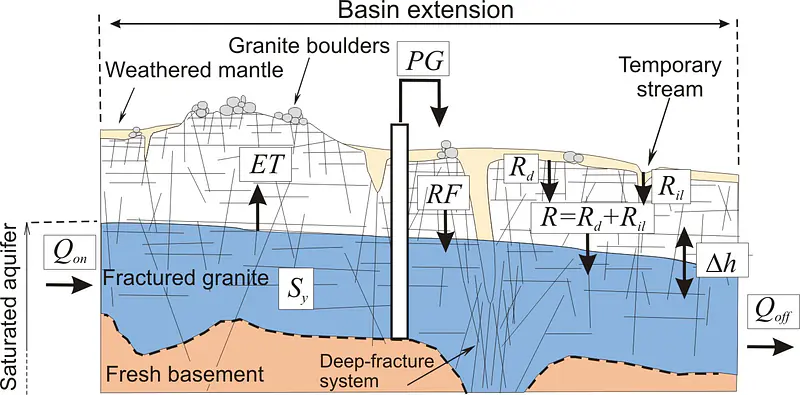
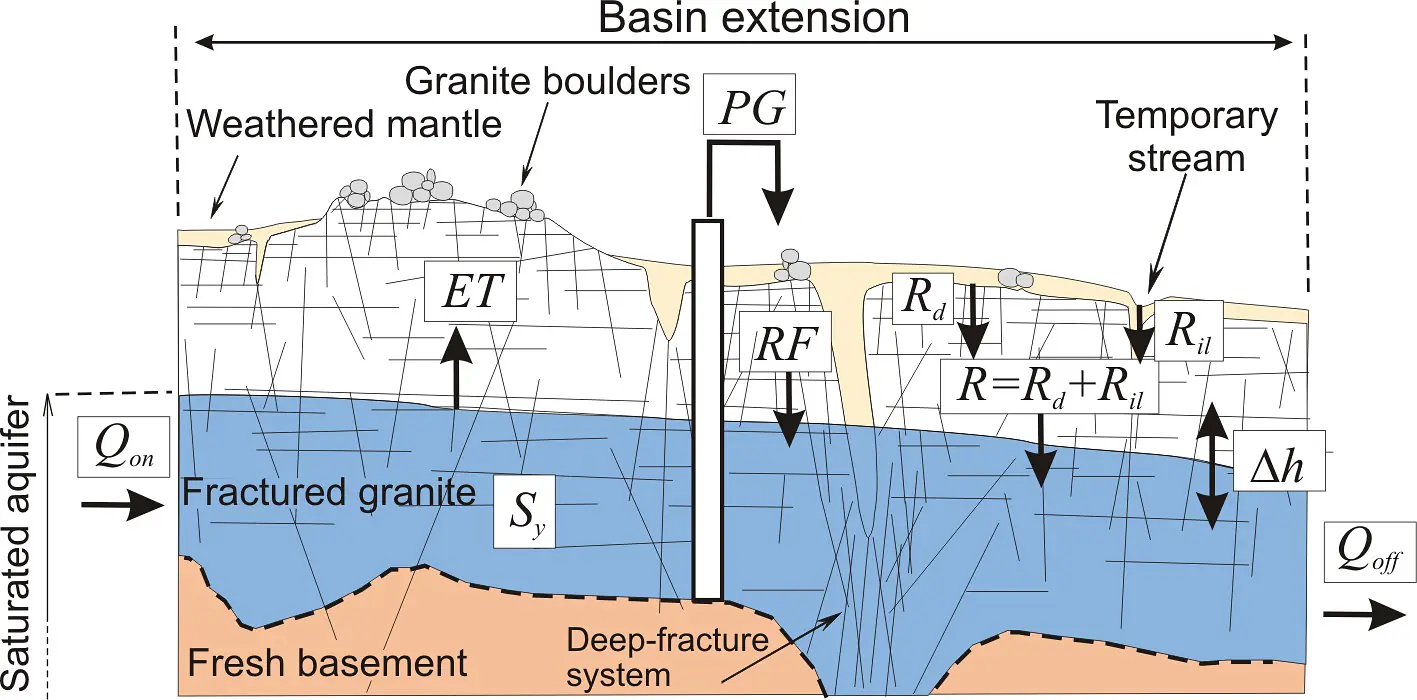
Recharge cannot be represented as a uniform flux: it depends on climate, land use, soil properties, topography and preferential infiltration pathways.
Jean-Christophe Maréchal, Pierre Perrochet, Yvan Caballero
Hydrogeology Journal, vol. 31, 2023 Nov, pp. 1991--1995
Mapping Economic Feasibility of Managed Aquifer Recharge
Jean-Christophe Maréchal, Madjid Bouzit, Jean-Daniel Rinaudo, Fanny Moiroux, Jean-François Desprats, Yvan Caballero
Water, vol. 12, 2020
Madeleine Nicolas, Olivier Bour, Adrien Selles, Benoit Dewandel, Vincent Bailly-Comte, Subash Chandra, Shakeel Ahmed, Jean-Christophe Maréchal
Journal of Hydrology, vol. 573, 2019 Jun, pp. 717--732
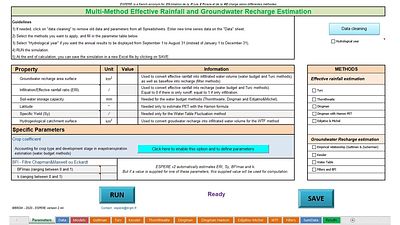
ESPERE A Multiple-Method Microsoft Excel Application for Estimating Aquifer Recharge
Sandra Lanini, Yvan Caballero, Jean-Jacques Seguin, Jean-Christophe Maréchal
Groundwater, vol. 54, 2016 Apr, pp. 155--156
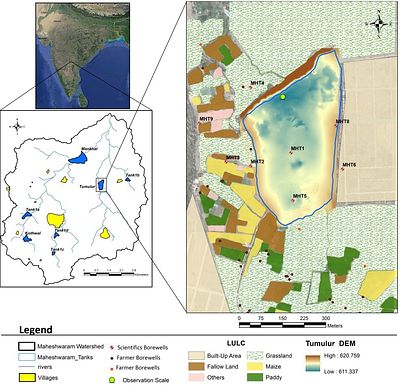
M. Alazard, A. Boisson, Jean-Christophe Maréchal, J. Perrin, B. Dewandel, T. Schwarz, M. Pettenati, G. Picot-Colbeaux, W. Kloppman, S. Ahmed
Hydrogeology Journal, vol. 24, 2016 Feb, pp. 35--57
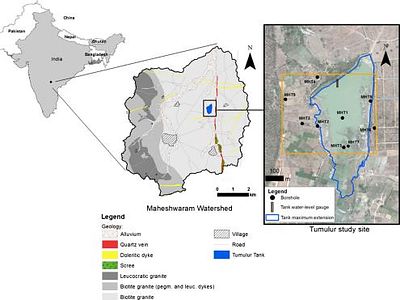
Alexandre Boisson, David Villesseche, Mathieu Baisset, Jérome Perrin, Matthieru Viossanges, W. Kloppmann, Shandra Chandra, Benoit Dewandel, G. Picot-Colbeaux, R. Rangarajan, Jean-Christophe Maréchal, Shakeel Ahmed
Environmental Earth Sciences, vol. 73, 2015 Jun, pp. 7711--7721
Laurent Ruiz, Murari R.R. Varma, M. S.Mohan Kumar, M. Sekhar, Jean-Christophe Maréchal, Marc Descloitres, Jean Riotte, Sat Kumar, C. Kumar, Jean Jacques Braun
Journal of Hydrology, vol. 380, 2010 Jan, pp. 460--472
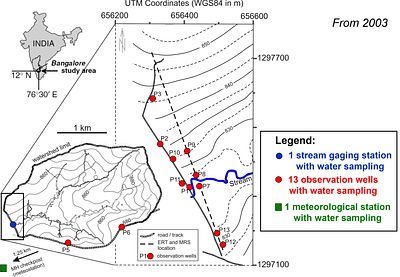
Indirect and direct recharges in a tropical forested watershed: Mule Hole, India
Jean-Christophe Maréchal, Murari R R Varma, Jean Riotte, Jean-Michel Vouillamoz, M S Mohan Kumar, Laurent Ruiz, Muddu Sekhar, Jean-Jacques Braun
Journal of Hydrology, vol. 364, 2009 Jan, pp. 272--284
Jean-Christophe Maréchal, Benoit Dewandel, Shakeel Ahmed, Laurent Galeazzi, Faizal K Zaidi
Journal of Hydrology, vol. 329, 2006 Sep, pp. 281--293
