

Fractured and karst aquifers
How can we represent the multiscale heterogeneity of aquifers in models that are physical enough to be predictive, yet simple enough to be operational?
How can we represent the multiscale heterogeneity of aquifers in models that are physical enough to be predictive, yet simple enough to be operational?
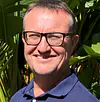
I am a senior hydrogeologist working on the observation and modelling of groundwater systems, with a particular focus on fractured and karst aquifers. My research combines field observations, hydrological monitoring, tracer techniques, data analysis and modelling to investigate groundwater flow, recharge, storage and interactions with surface environments. A particular focus of my recent work is the functioning of coastal karst aquifers and submarine springs, including the Vise submarine spring in the Thau Lagoon, southern France.
More About me
Explore my Research and my Research sites
Read my Key Publications
The Vise is a submarine karst spring located in the Thau Lagoon, southern France
Its highly dynamic behaviour provides an exceptional opportunity to investigate groundwater flow in coastal karst systems, including flow reversal, saltwater intrusion and groundwater–seawater interactions.
My research on the Vise combines long-term monitoring, field observations and modelling.
Explore Vise & Thau research
I am committed to sharing groundwater science beyond academia through journalism, media, public talks and outreach activities.
I contribute to The Conversation France, where I explain groundwater, karst hydrogeology and water-related environmental issues to a wider audience.
This is a personal website. The views expressed here are my own and do not necessarily reflect those of my employer or any affiliated institution.

