Banner image placeholder
Banner image
Site avatar
Jean-Christophe Maréchal
Hydrogeologist - Fractured and Karst aquifers

Curriculum vitae


G-EAU

BRGM

1039 rue de Pinville
34000 Montpellier
FRANCE


Mule Hole forest watershed (India)


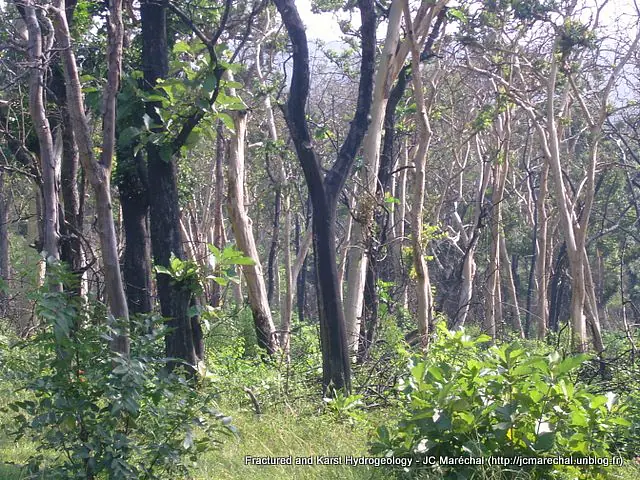
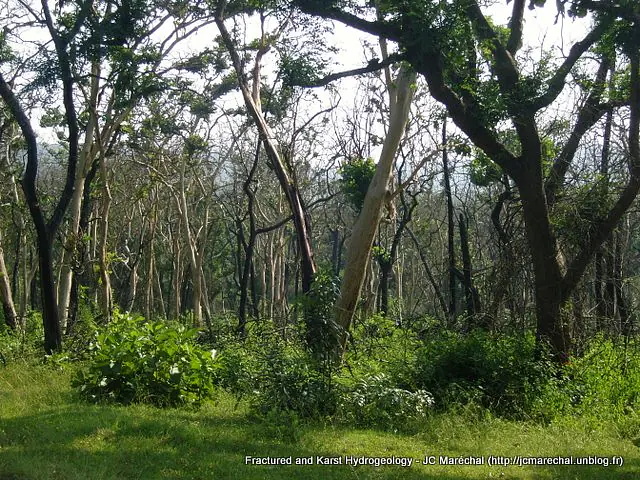
Vegetation controls water availability → the regolith stores and delays water → groundwater flows through the crystalline aquifer → groundwater exports the products of weathering.
🆔

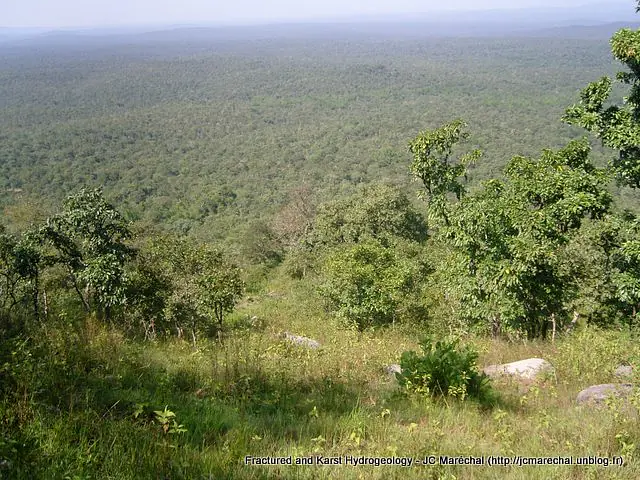
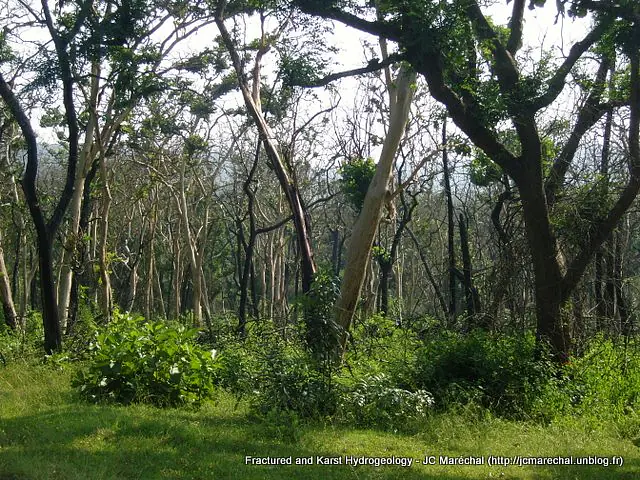
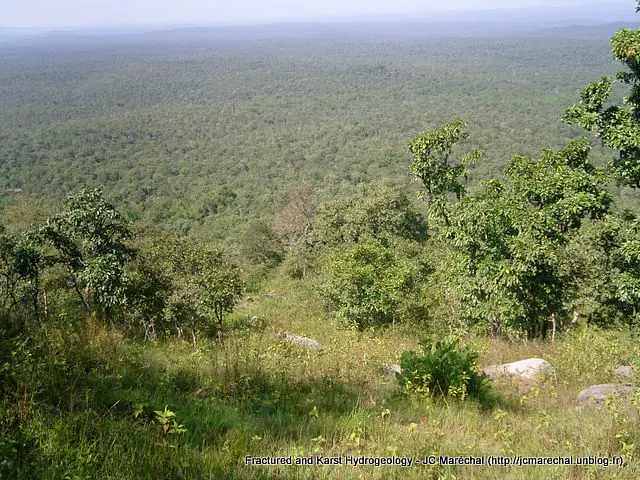
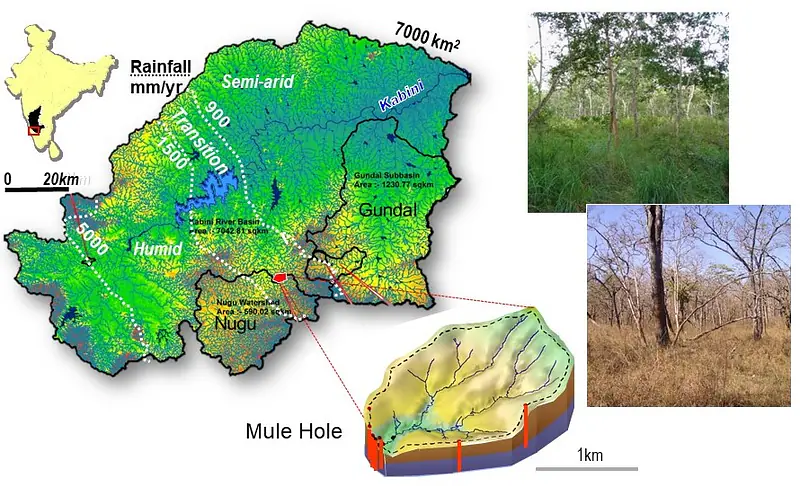
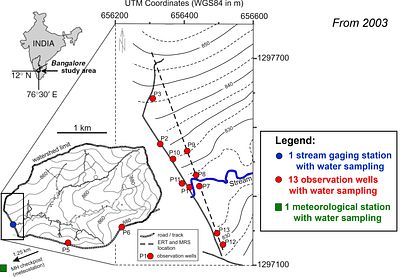
Location: Bandipur Forest, South of Bangalore, Karnataka state, India

Elevation: 820 - 910 m a.s.l.

Geology: Crystalline rock basement (gneiss, granite)

Aquifer type: fractured crystalline-rock aquifer 

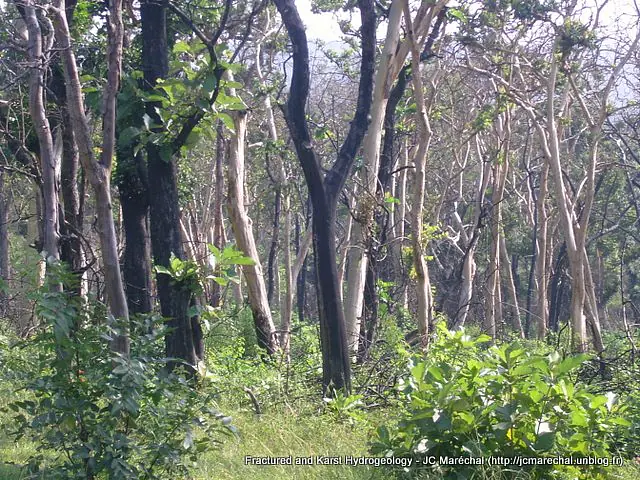
Scientific question: "How does the forest influence weathering and water cycle under tropical conditions?"

The Mule Hole watershed is part of M-TROPICS Observatory and the OZCAR research infrastructure

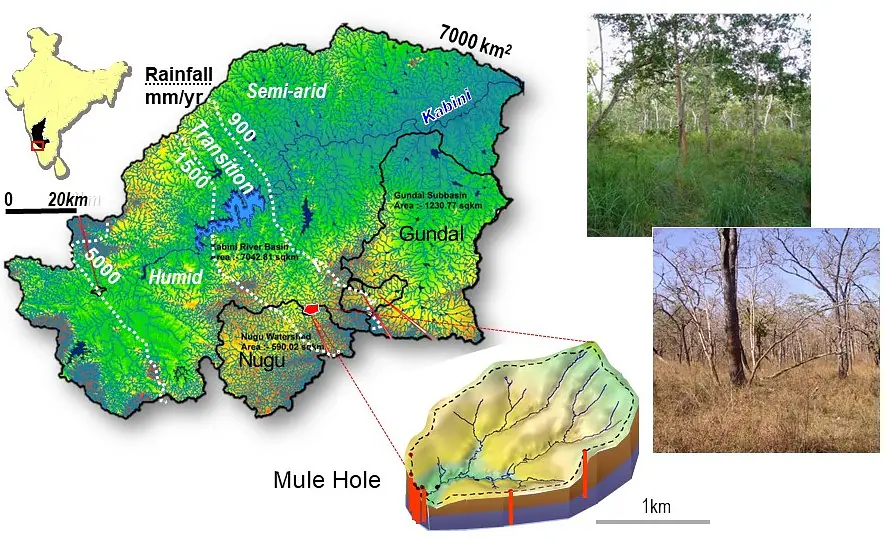
Location map

Key findings

  • Forest evapotranspiration strongly limits groundwater recharge, with deep roots extracting water from the regolith.
  • The thick weathered mantle acts as a major water reservoir, buffering and delaying groundwater recharge.
  • Groundwater and surface water are largely disconnected, with significant recharge occurring indirectly from the stream.
  • Deep groundwater flow dominates the chemical export from the watershed, accounting for more than 90% of the dissolved chemical flux.

Hydrogeological model

(a) Cross section of the experimental site with water table fluctuations (LF: pre-monsoon low flow in June 2006; HF: post-monsoon high flow in December 2005) . (b) Recharge estimated using CMB method. (c) Water content from geophysical measurements (MRS)
😜

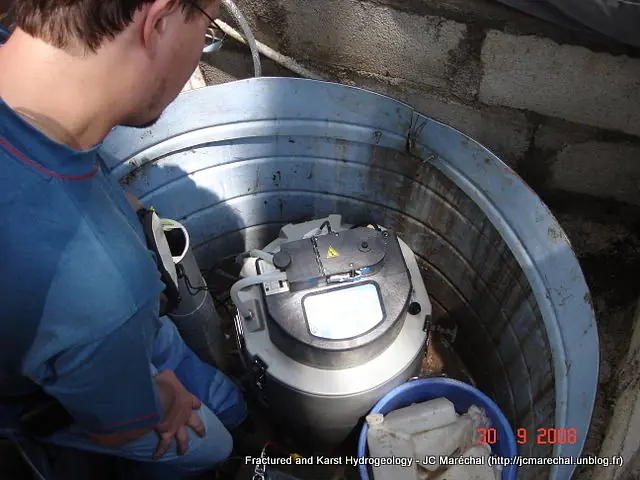
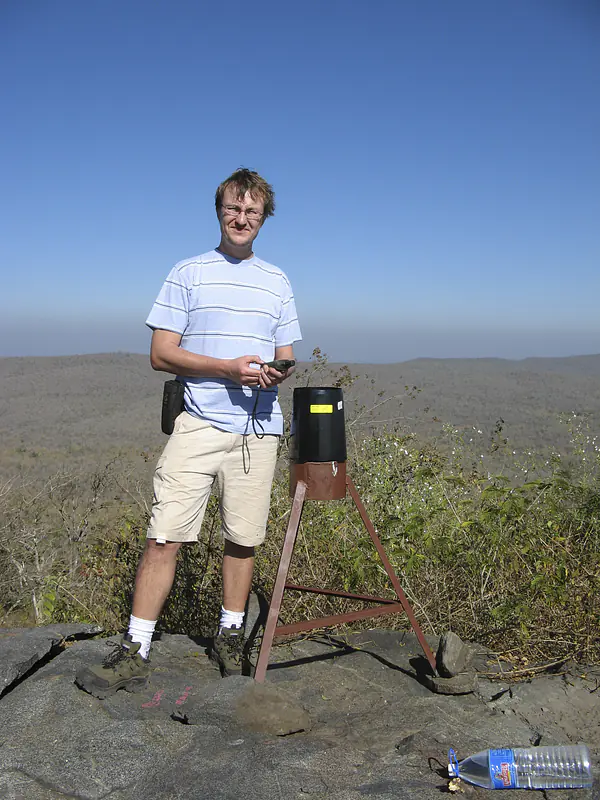
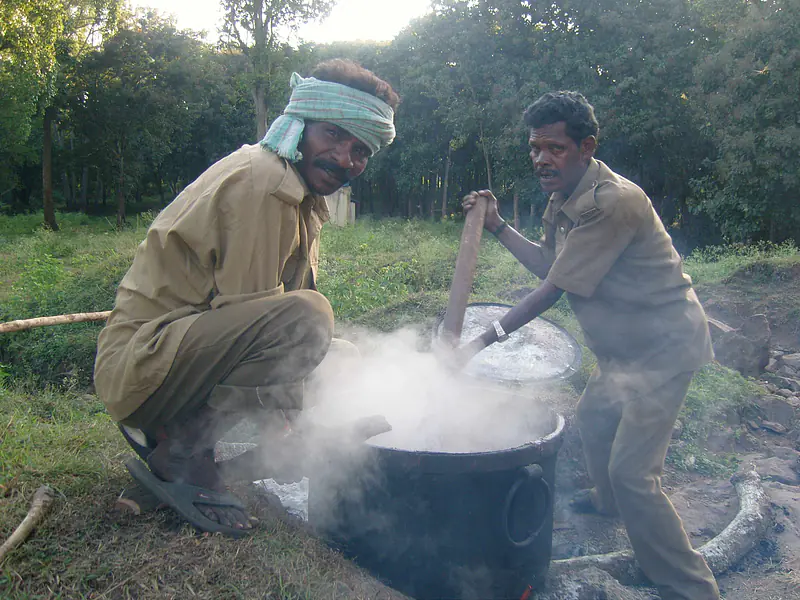
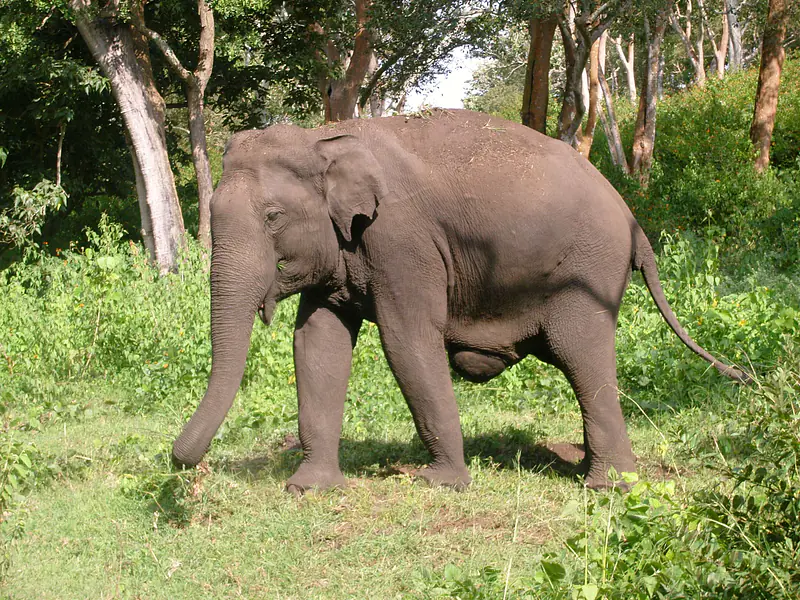
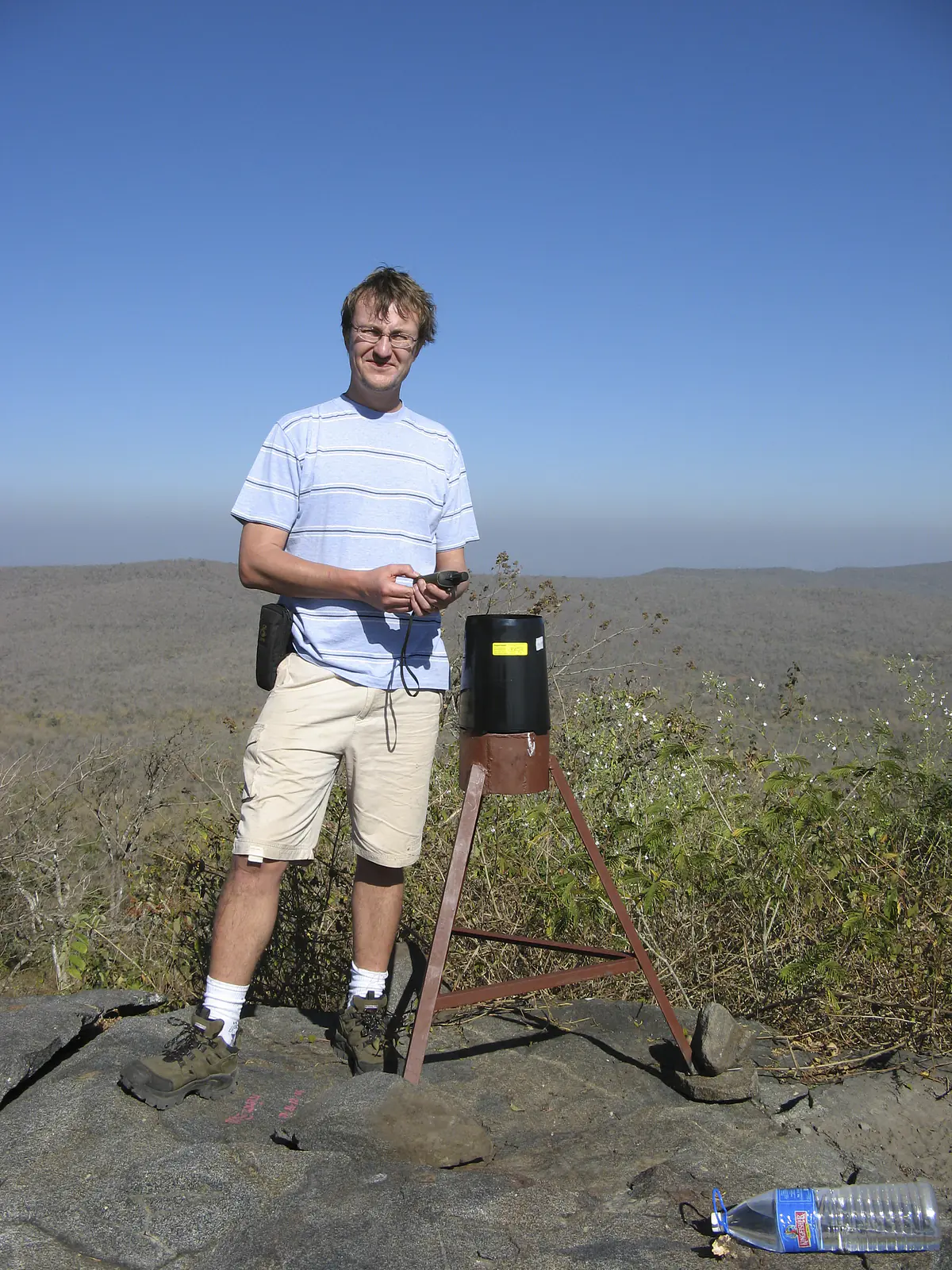
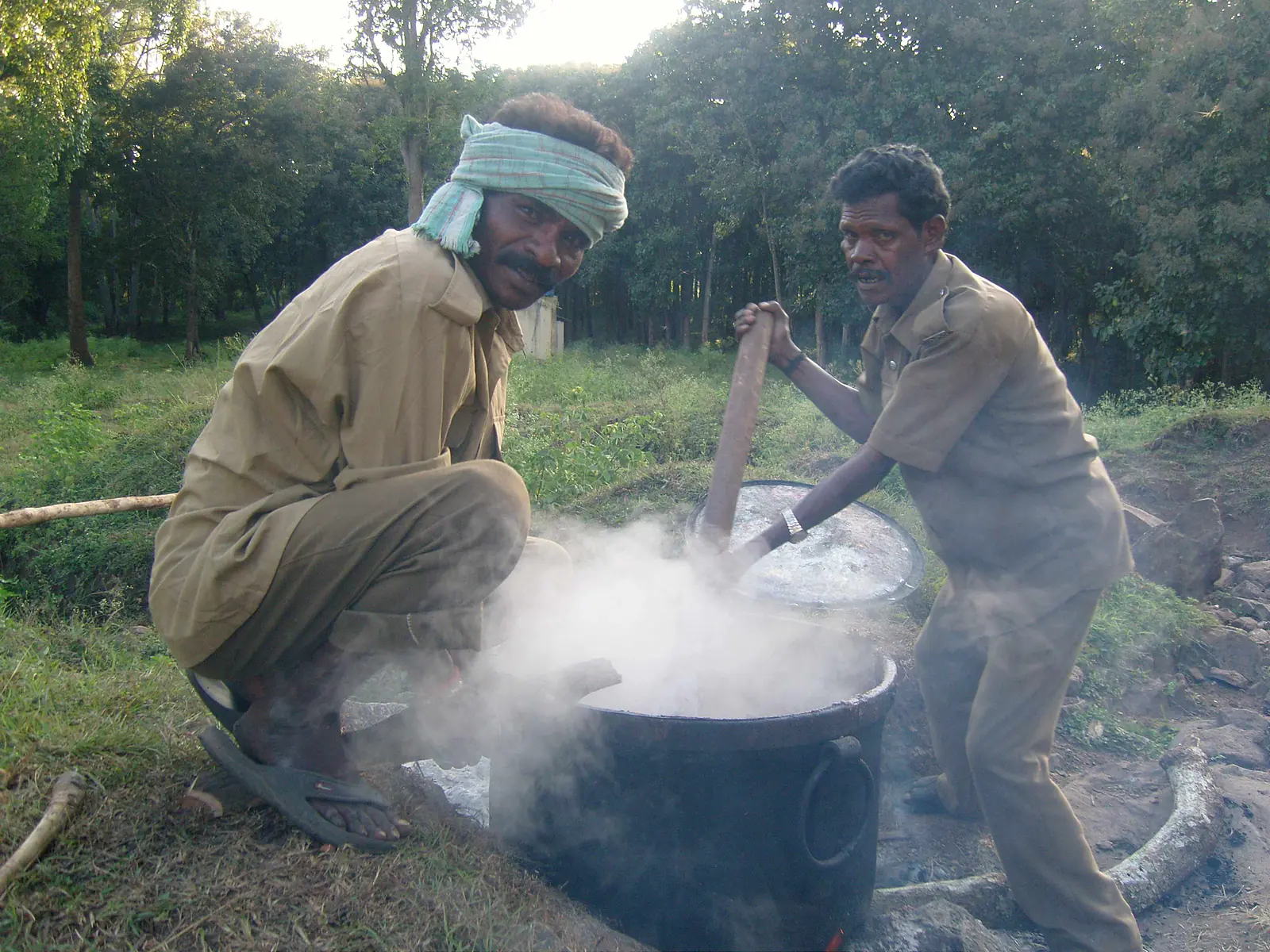
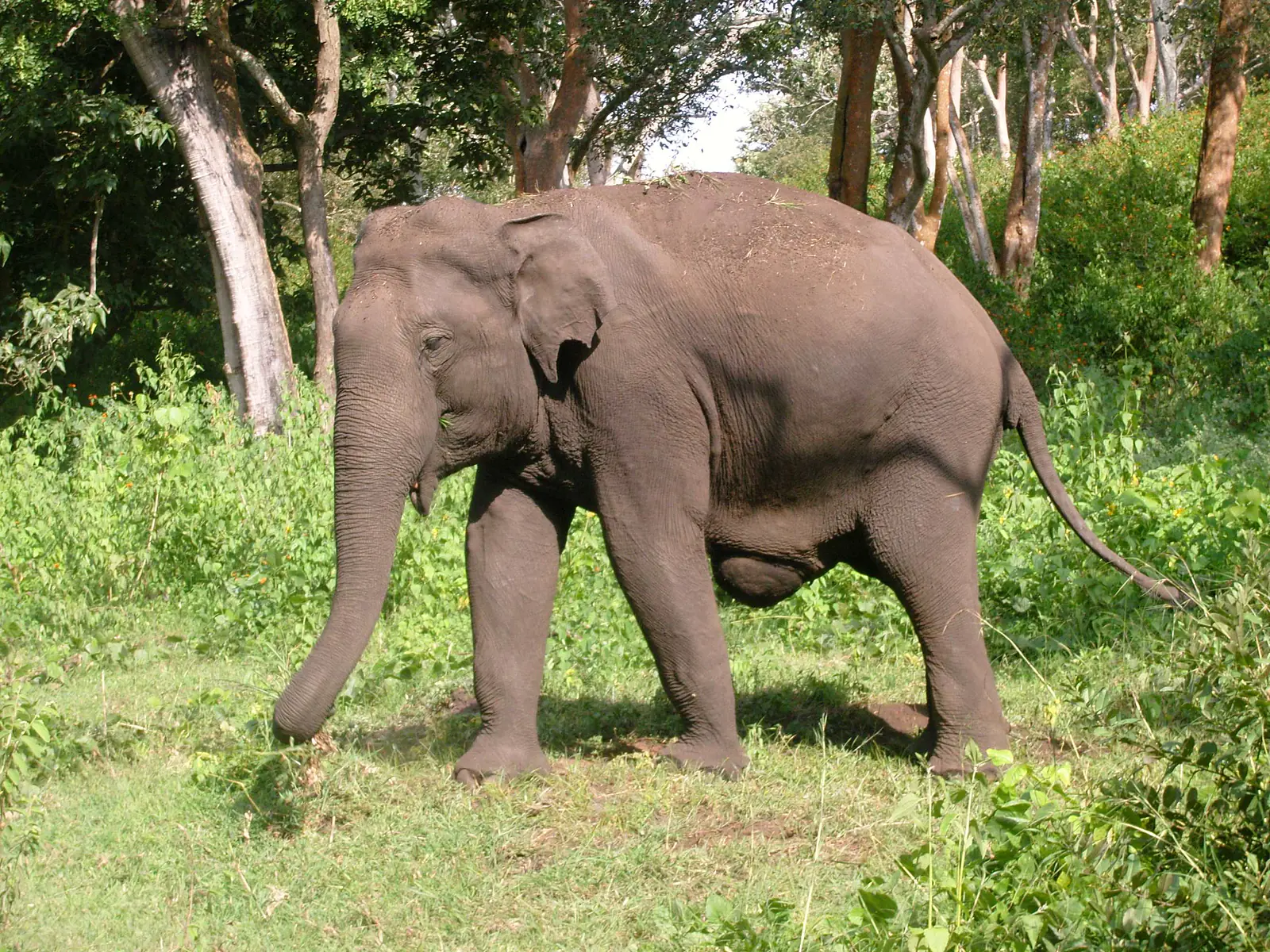
MULE HOLE – FIELDWORK: SOMETIMES HYDROGEOLOGY IS NOT THE BIGGEST CHALLENGE!

😜

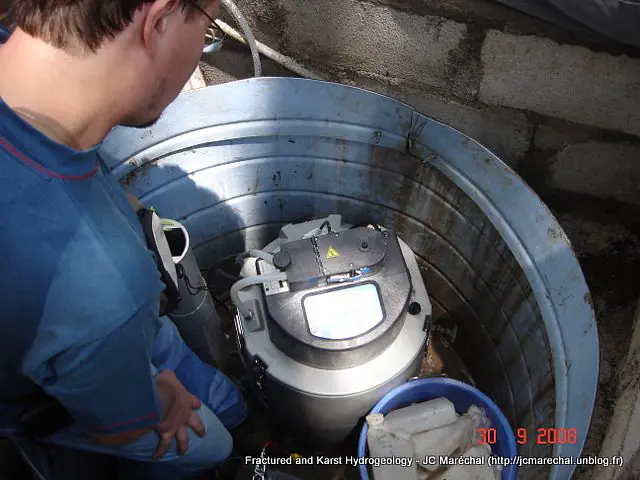
 Groundwater monitoring: 100% successful. Elephant avoidance: also successful. 

Scientific collaborations

  • Indian Institute of Science team: M. Sekhar, M. Kumar, M. Varma, S. Subramanian
  • IRD & GET teams: JJ. Braun, J. Riotte, JM. Vouillamoz, S. Audry, C. Lagane


The Multiscale TROPIcal CatchmentS critical zone observatory M-TROPICS dataset III: Hydro-geochemical monitoring of the Mule Hole catchment, south India


Jean Riotte, Laurent Ruiz, Stephane Audry, Jean-Pierre Bedimo Bedimo, Jean-Jacques Braun, Bernard Dupre, Christelle Lagane, Jean-Christophe Maréchal, Hemanth Moger, Mandalagiri Subbarayappa Mohan Kumar, Murari Varma, Muddu Sekhar

Hydrological Processes, vol. 35, 2021
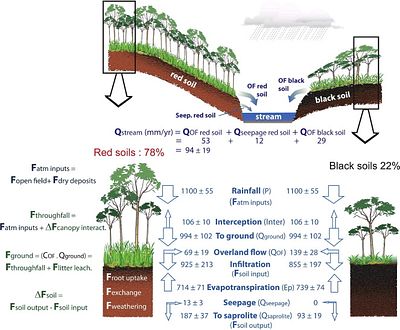


Vegetation impact on stream chemical fluxes: Mule Hole watershed (South India)


Jean Riotte, Jean-Christophe Maréchal, Stéphane Audry, C. Kumar, J.P. Bedimo Bedimo, Laurent Ruiz, Muddu Sekhar, M. Cisel, , M.R.R. Varma, C. Lagane, P. Reddy, Jean-Jacques Braun

Geochimica et Cosmochimica Acta, vol. 145, 2014, pp. 116-138
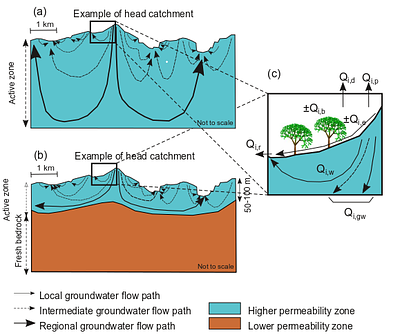


Deep groundwater flow as the main pathway for chemical outputs in a small headwater watershed (Mule Hole, South India)


Jean-Christophe Maréchal, Jean Riotte, Christelle Lagane, S. Subramanian, C. Kumar, Laurent Ruiz, Stéphane Audry, M.R.R. Varma, Jean-Jacques Braun

Applied Geochemistry, vol. 26, 2011, pp. S94-S96


Indirect and direct recharges in a tropical forested watershed: Mule Hole, India


Jean-Christophe Maréchal, Murari R R Varma, Jean Riotte, Jean-Michel Vouillamoz, M S Mohan Kumar, Laurent Ruiz, Muddu Sekhar, Jean-Jacques Braun

Journal of Hydrology, vol. 364, 2009 Jan, pp. 272--284

Share

Text Only Owlstown
QR Code
Translate to